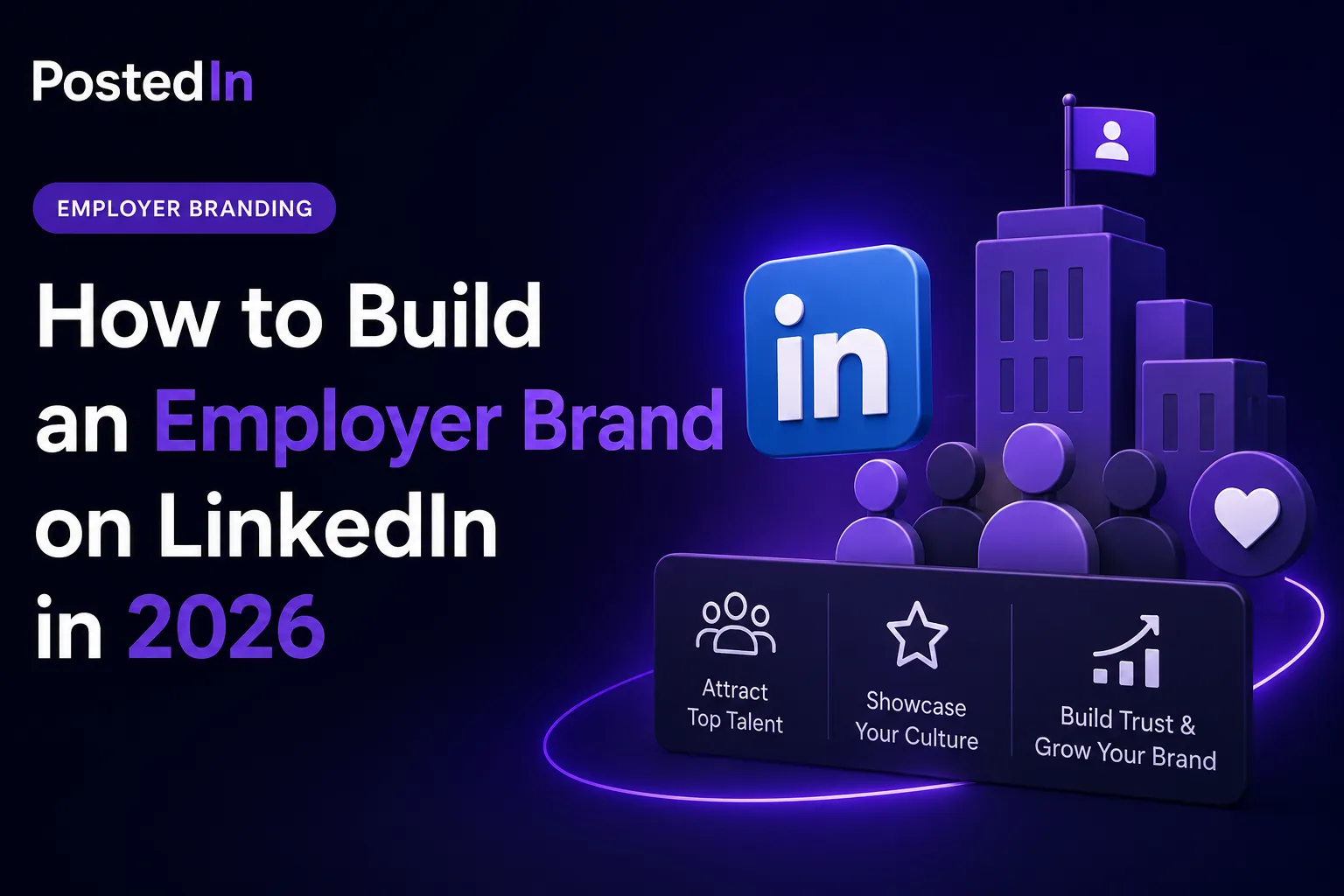
How to Build an Employer Brand on LinkedIn in 2026
Employer branding has become one of the most important factors in attracting top talent. In 2026, candidates don't only evaluate salaries and benefits. They also evaluate company culture, leadership, values, and employee experiences before applying. LinkedIn has become one of the most powerful platforms for building an employer brand and showcasing what it's like to work at your company. In this guide, you'll learn how to build an employer brand on LinkedIn and attract better candidates through content and consistency.
What Is Employer Branding?
Employer branding is the perception people have of your company as a workplace. It influences:
- Candidate interest
- Application quality
- Employee retention
- Company reputation
- Recruiting costs
A strong employer brand helps companies attract talent without relying entirely on job advertisements.
Why LinkedIn Matters for Employer Branding
When candidates discover your company, one of the first places they visit is LinkedIn. They look at:
- Company pages
- Employee profiles
- Leadership activity
- Company culture
- Content
- Reviews and reputation
An inactive LinkedIn presence can make even a great company appear less attractive.
1. Encourage Employee Advocacy
Your employees are often your most valuable brand ambassadors. People trust employees more than corporate messaging. Encourage team members to:
- Share experiences
- Discuss projects
- Celebrate milestones
- Highlight achievements
Authentic employee content often generates stronger engagement than company updates.
2. Showcase Company Culture
Candidates want to understand what working at your company feels like. Share content about:
- Team events
- Remote work culture
- Behind-the-scenes moments
- Employee achievements
- Learning and development initiatives
The goal is to provide an authentic view of your workplace.
3. Build a Visible Leadership Presence
Leadership visibility plays a major role in employer branding. Founders and managers should actively share:
- Industry insights
- Lessons learned
- Company updates
- Strategic decisions
Strong personal brands often strengthen employer brands.
4. Create Consistent Content
Consistency matters. Many companies only post when they have an open position. Instead, create a content strategy that includes:
- Industry insights
- Employee stories
- Hiring updates
- Company milestones
- Educational content
This helps build familiarity and trust over time.
5. Highlight Employee Success Stories
Candidates want to see growth opportunities. Share stories about:
- Promotions
- Career development
- Certifications
- Personal achievements
These stories demonstrate investment in employees and strengthen credibility.
6. Use Visual Content
Visual content performs particularly well on LinkedIn. Examples include:
- Team photos
- Office tours
- Event recaps
- Infographics
- Employee spotlights
Visuals help humanize your brand and increase engagement.
7. Create a Long-Term Employer Branding Strategy
Employer branding is not a one-time campaign. Successful companies continuously invest in:
- Content creation
- Community building
- Employee advocacy
- Leadership visibility
Over time, these efforts compound and create a stronger reputation.
How AI Can Support Employer Branding
Creating content consistently can be difficult for growing companies. AI-powered tools can help with:
- Content ideation
- Draft creation
- Content planning
- Scheduling
- Publishing
Platforms such as PostedIn can help teams streamline LinkedIn content creation and maintain a consistent publishing schedule. The goal is not to replace authentic voices but to make employer branding efforts more sustainable.
Common Employer Branding Mistakes
Avoid these mistakes:
- Posting only job offers
- Ignoring employee voices
- Inconsistent publishing
- Overly corporate messaging
- Lack of leadership visibility
Authenticity and consistency are often more important than polished marketing campaigns.
Final Thoughts
Employer branding is no longer optional. Companies that invest in visibility, employee advocacy, and consistent content are more likely to attract high-quality candidates and strengthen their reputation. LinkedIn remains one of the most effective channels for employer branding in 2026. By sharing authentic stories, showcasing company culture, and maintaining a consistent presence, organizations can create a competitive advantage in the talent market.
Frequently Asked Questions
What is employer branding?
Employer branding is the reputation and perception of a company as a workplace.
Why is LinkedIn important for employer branding?
LinkedIn helps companies showcase culture, leadership, employee experiences, and career opportunities.
How can companies improve employer branding?
Companies can improve employer branding through employee advocacy, consistent content, leadership visibility, and authentic storytelling.
Can AI help with employer branding?
Yes. AI tools can support content creation, planning, scheduling, and publishing while helping teams maintain consistency.
Related articles
LinkedIn Post Character Limit: 3,000 Characters and How to Edit
The LinkedIn post character limit is 3,000. Learn how to count a draft, improve its opening and trim text without losing the point...
LinkedIn Hashtags: How to Choose Relevant Tags (with Examples)
A practical guide to choosing LinkedIn hashtags for professional posts, with examples, mistakes to avoid and a free hashtag genera...
How to Format a LinkedIn Post: Line Breaks, Bold Text and Examples
Learn how to format a LinkedIn post with readable line breaks, selective emphasis and a practical before-and-after example. Try a...