How to Write LinkedIn Posts That Don't Sound Like AI
How to Write LinkedIn Posts That Don't Sound Like AI
AI has made content creation faster than ever. But there's a problem. Most AI-generated LinkedIn posts sound exactly like AI. You know the type:
- Generic advice
- Empty motivational statements
- Repetitive phrases
- Overused hooks
- No personal experience
- No unique perspective
As more professionals use AI to create content, standing out on LinkedIn requires something different: authenticity. In this guide, you'll learn how to write LinkedIn posts that sound human, build trust, and generate engagement without sounding like they were written by a robot.
Why AI-Generated LinkedIn Posts Often Fail
Most AI tools generate content based on patterns. That means they often produce posts like:
"In today's fast-paced digital landscape..."
Or:
"Here's what I learned from my journey..."
Or:
"Let that sink in."
The problem isn't AI itself. The problem is that many people publish the first draft without adding their own experiences, opinions, or personality. Readers can spot generic content immediately. And when every post sounds the same, engagement drops.
What Human-Sounding LinkedIn Posts Have in Common
The best LinkedIn posts share a few characteristics:
Personal Experience
People trust stories more than generic advice. Instead of:
Networking is important.
Try:
The best client I ever got came from a LinkedIn comment I almost didn't write.
Specific experiences feel authentic because they are.
Strong Opinions
You don't need controversial opinions. But you should have a point of view. Instead of:
AI can help with content creation.
Try:
AI shouldn't replace your voice. It should help you express it faster.
Specific Details
Generic posts are forgettable. Specific posts are memorable. Instead of:
I improved my results.
Try:
One small change increased my profile views by 43% in 30 days.
Specificity creates credibility.
How to Use AI Without Sounding Like AI
Start With Your Own Ideas
Don't ask AI to write the entire post. Instead, provide:
- Your experience
- Your opinion
- Your lesson learned
- Your story
AI should help you structure and improve content, not invent your perspective.
Edit the First Draft
Never publish the first output. Remove:
- Buzzwords
- Corporate jargon
- Generic introductions
- Repetitive phrases
Add:
- Personal details
- Real examples
- Your natural writing style
Use Simple Language
Many AI tools default to formal writing. LinkedIn readers prefer clarity. Write the way you speak. Simple beats impressive.
Share Real Stories
The easiest way to sound human is to talk about something that actually happened. Stories create connection. And AI cannot replicate experiences you genuinely lived through.
Common AI Phrases to Avoid
Many LinkedIn posts immediately feel AI-generated because they use phrases like:
- In today's fast-paced world
- Let's dive in
- It's worth noting
- Game changer
- Leverage
- Unlock your potential
- Delve into
- Revolutionary
These phrases aren't always bad. They're just overused. Replacing them with natural language instantly improves readability.
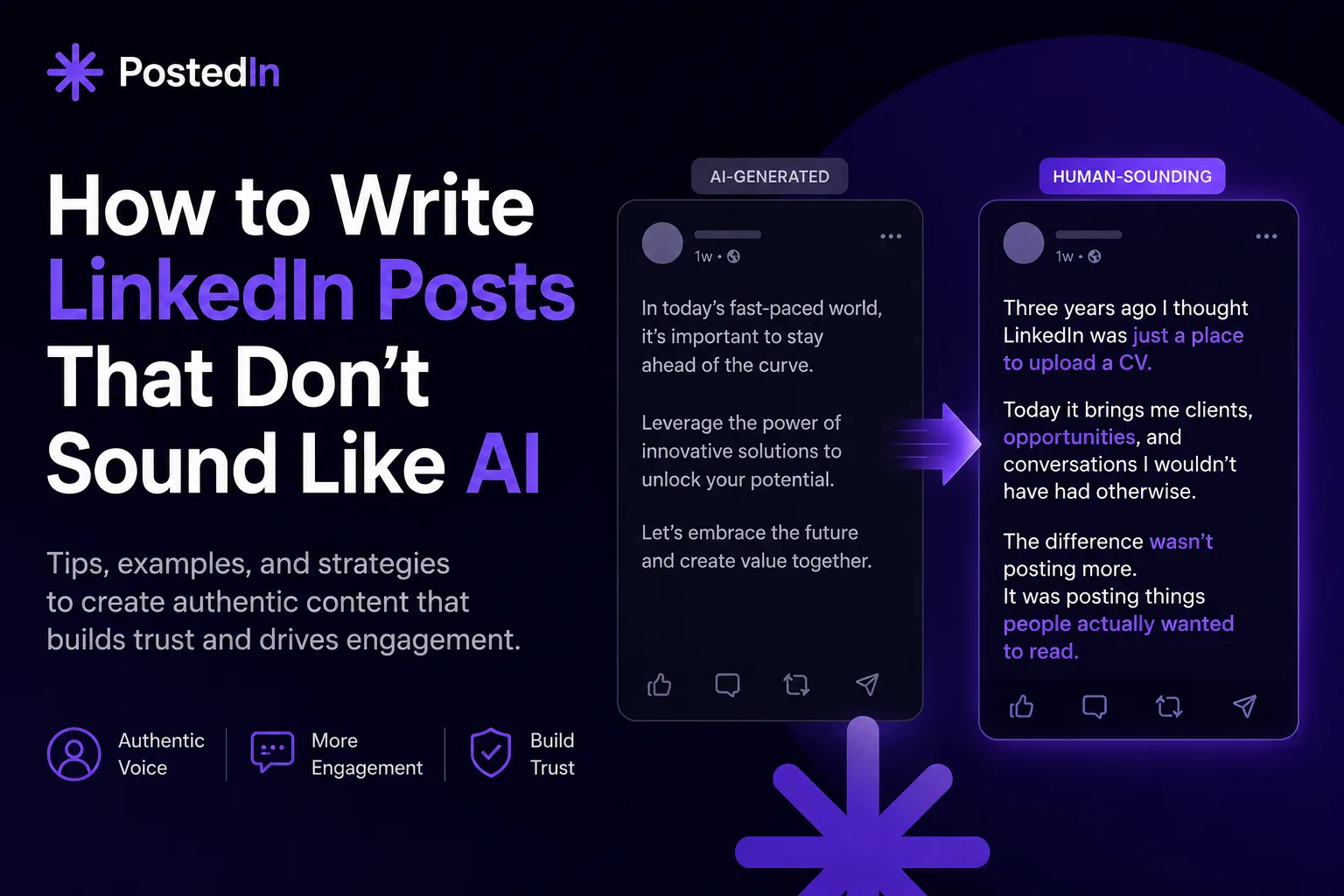
Example: AI vs Human
Generic AI Version
Building a personal brand on LinkedIn is essential for professionals looking to establish authority and expand their network.
Human Version
Three years ago I thought LinkedIn was just a place to upload a CV. Today it brings me clients, opportunities, and conversations I wouldn't have had otherwise. The difference wasn't posting more. It was posting things people actually wanted to read.
The second example feels more authentic because it includes personal context and emotion.
Tools That Help Create Human-Sounding LinkedIn Content
The best AI tools don't try to replace your voice. They help you refine it. Platforms like PostedIn focus on generating LinkedIn content that sounds natural while helping users:
- Generate ideas
- Draft posts faster
- Schedule content
- Maintain consistency
The goal isn't to sound like AI. The goal is to sound more like yourself.
Final Thoughts
AI is changing how professionals create content. But the people who win on LinkedIn won't be the ones who publish the most AI-generated posts. They'll be the ones who combine AI efficiency with human experience. Use AI to speed up the process. Use your own voice to make the content worth reading. That's what creates engagement, trust, and long-term growth on LinkedIn.
Powiązane artykuły
Jak tworzyć miesiąc treści na LinkedIn w jeden dzień?
Brakuje Ci czasu na regularne publikowanie na LinkedIn? Zobacz, jak zaplanować i przygotować miesiąc treści w jeden dzień dzięki c...
Jak promować startup na LinkedIn?
LinkedIn może być jednym z najskuteczniejszych kanałów promocji startupu. Zobacz, jak budować zainteresowanie produktem, zdobywać...
Jak napisać sekcję „O mnie" na LinkedIn — wzory i przykłady
Pusta sekcja „O mnie" to jeden z największych błędów na LinkedIn. Sprawdź, jak napisać About, które przyciąga rekruterów, klientów...